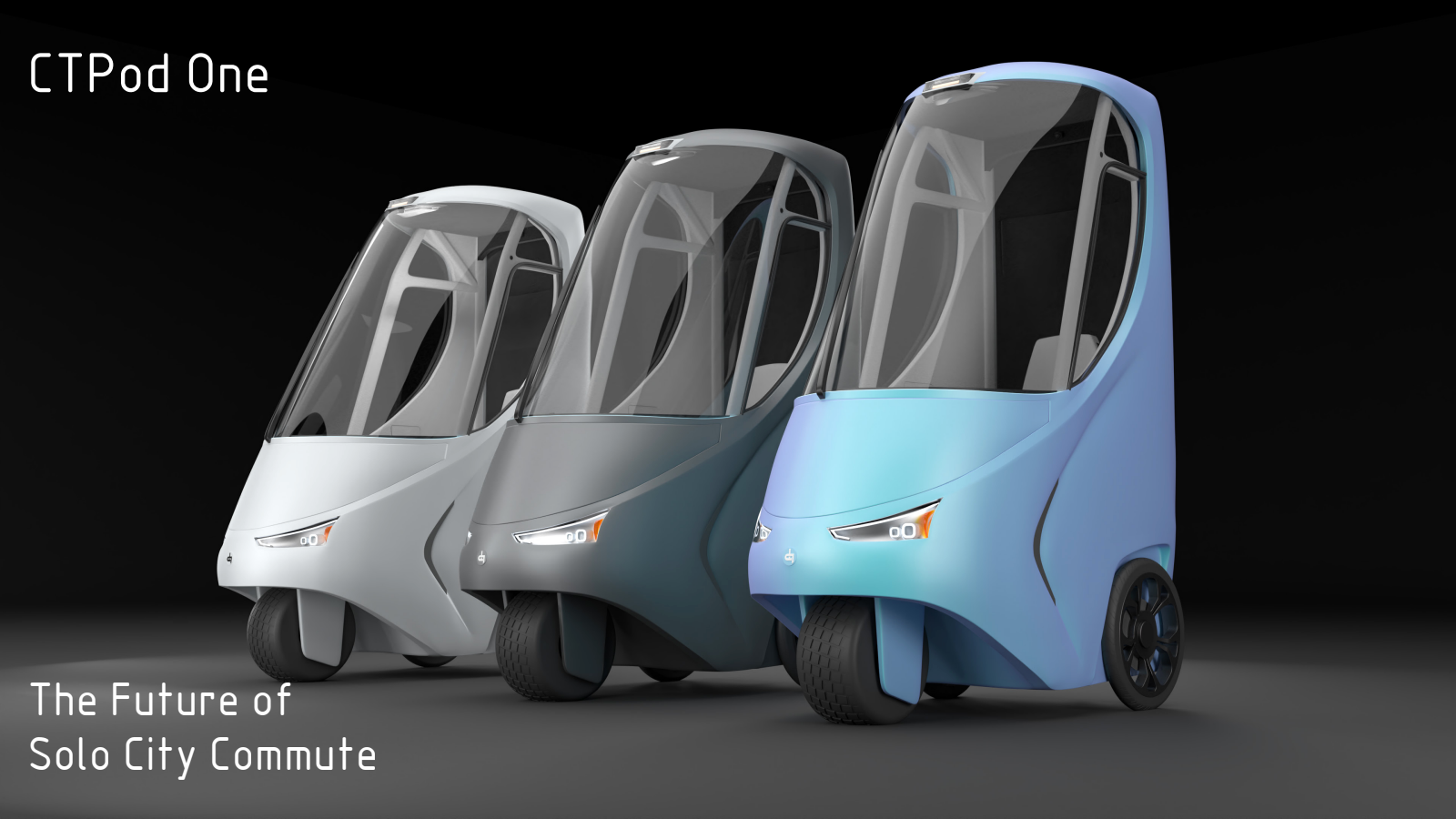
CTPOD Prototype – SMART ADVANCED 3-WHEELER FOR HOME DELIVERIES
Prototype for IoT-Enabled Electric Delivery Vehicle
CATEGORY
- Electric Vehicles
- Smart Mobility
- IoT
Confidential Prototype
SERVICES
- Feasibility & Product Design
- Full-Cycle EV Design
- Hardware & PCB Engineering
- Mechanical Engineering
- Firmware Development
- Prototyping (EVT, DVT, PVT)
PROJECT TIMELINE
THE CHALLENGE
Design a compact, three-wheeled electric vehicle that can autonomously ferry modular delivery pods from home to curbside, blending: Modularity for quick-swap cargo pods with optional climate control; IoT Connectivity for real-time tracking, remote locking, and status display; Off-grid Power via swappable batteries and integrated solar charging; Safety & Visibility in urban environments, day and night; User-Friendly Operation for untrained operators and end-recipients.
- Modularity: Quick-swap cargo pods with optional climate control
- IoT Connectivity: Real-time tracking, remote locking, and status display
- Off-grid Power: Swappable batteries and integrated solar charging
- Safety & Visibility: Urban environments, day and night
- User-Friendly Operation: For untrained operators and end-recipients
THE KEY HURDLES INCLUDED:
- •Cargo Pod Docking Issues – Initial misalignment and vibration caused pods to shift; solved with alignment guides and reinforced latches.
- •Battery Hot-Swap Reliability – Power interruptions occurred during swaps; fixed with smarter BMS handshake and seamless power-routing logic.
- •Solar Panel Durability – Early origami hinges wore out quickly; redesigned with stronger materials and waterproof sealing.
- •IoT Connectivity Dropouts – Dense urban areas caused LTE dropouts; improved with dual-antenna tuning and BLE fallback.
THE OPPORTUNITY
Rapid-growth e-commerce and 'last-100-feet' logistics demand agile, low-cost vehicles that: Operate on narrow driveways and congested streets; Reduce delivery emissions through pure-electric drive; Minimize downtime via hot-swap battery modules and solar top-up; Enhance UX with contactless locking, live status screens, and built-in comms.
- Operate on narrow driveways and congested streets.
- Reduce delivery emissions through pure-electric drive.
- Minimize downtime via hot-swap battery modules and solar top-up.
- Enhance UX with contactless locking, live status screens, and built-in comms.
FEATURE SETS
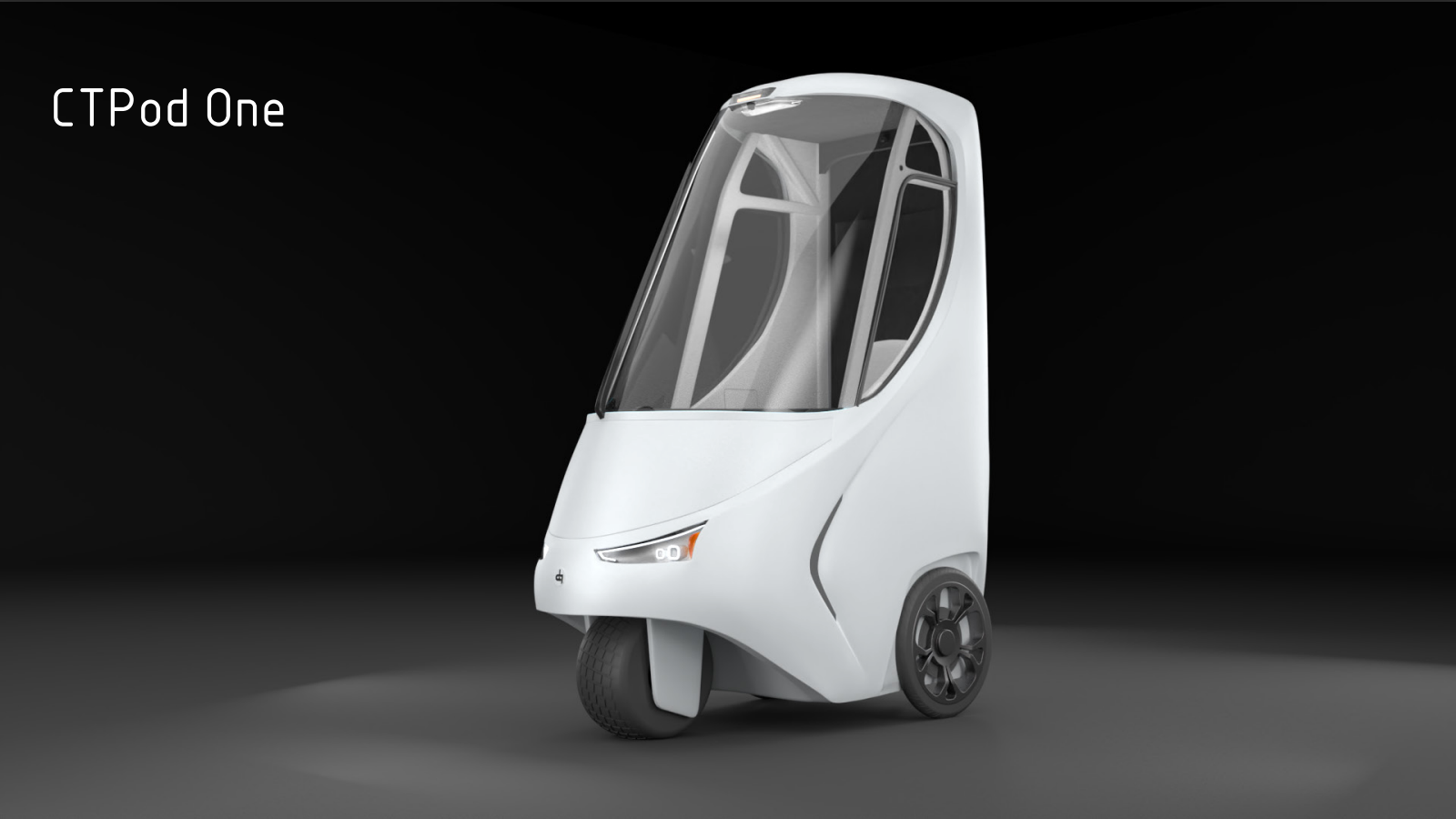
- •Three-Wheel EV Chassis (2 rear, 1 front) with 2.075 m length × 0.9 m width × 1.1 m height
- •Swappable Battery Bays—up to four 48 V modules for extended range
- •Modular Cargo Pod (0.3 m³ per module; 0.6 m³ max volume) with transparent sliding lid, venting, and optional cooling/heating inserts
- •Container Lifting System for tool-free off-vehicle stand deployment
- •Solar Origami fold-out panel (1.44 m span) for trickle charging during idle
- •Front & Rear Towing Connectors for trailers or accessory carts
- •4× HD Cameras + LED Screens for 360° obstacle detection and delivery status
- •Audio I/O (microphone & speaker) for two-way customer communication
- •LED Lighting: headlight, brake/reverse, turn signals, emergency flashers

GALLERY
THE SOLUTION
Axio Electronics delivered a modular, IoT-enabled electric delivery vehicle prototype with advanced power management, safety, and user-centric features.

BATT
Swappable Battery Modules – Hot-swap 48 V packs for continuous operation

SOLAR
Fold-Out Solar Panel – 10 W origami-fold design for trickle charging

POD
Modular Cargo Pod – 0.3 m³ segments, optional temp control, quick-release stand

LIGHT
Full LED Lighting Suite – Headlight, turn, brake, reverse, and emergency lighting

CAM
4× HD Cameras – Obstacle detection & route verification

DISP
Embedded Status Screens – On-board delivery info & vehicle diagnostics

AUDIO
Two-Way Audio – Microphone & speaker for customer interaction

IOT
IoT Connectivity – Cellular/LTE + BLE for live tracking, OTA firmware updates
OUR APPROACH

Mechanical Engineering Strategy
Chassis Layout: Designed three-wheel stability with tight turning radius.
Pod Integration: Quick-release latch & sealed electrical/data connectors.
Solar & Storage: Hinged panel stows flush when not in use.
Safety: Rigid steel frame, impact-absorbing bumpers, IP54 electronics enclosures.

Mechanical Engineering Process
CAD surfacing & finite-element crash simulations
SLA scale models for fit, ergonomics, and mount alignment
Rapid CNC prototypes of hinge and clamp assemblies
Test-fixture development for pod docking repeatability

PCB & Hardware Design
Motor Controller: 3 kW BLDC inverter with regen braking
Battery Management: Cell-balancing BMS per 48 V pack
Sensor Fusion: IMU, wheel-speed, steering-angle, and GPS
Telematics: LTE modem + BLE beacon for local diagnostics
Power Routing: Automatic switchover between batteries and solar input
Firmware Design
Drive Logic: Torque-vectoring for smooth three-wheel handling
Pod Detection: Hall sensors & CAN bus handshake for secure lock/unlock
Solar MPPT: Real-time panel voltage optimization for max power harvest
Telematics Stack: MQTT over TLS for live-stream telemetry & OTA updates
Safety Routines: Over-temp, over-current, and fault-mode handling

In-House Prototyping
EVT: Bench-tested motor performance, battery life cycles, and solar charge curves
DVT: Urban test loop—load handling, turning radius, and pod mounting under real-world conditions
PVT: 10-unit pilot in gated-community deliveries—99 % successful drop-offs, zero mechanical failures

Key Challenges & Resolutions
- Pod Docking Inconsistencies: Initial misalignment during automated docking— Resolved by refining latch design and adding alignment guides to the mounting base.
- Solar Panel Hinge Failures: Early hinge mechanisms wore out quickly under real-world conditions— Addressed with reinforced materials and lifecycle-tested CNC hinge redesign.
- Battery Hot-Swap Errors: Inconsistent power routing when switching between battery modules— Fixed with improved power switching logic and real-time battery detection firmware.
- Audio Communication Latency: Delays in customer interaction via mic and speaker— Optimized audio codec and signal processing pipeline for low-latency communication.
- Telematics Dropouts: Intermittent loss of cellular connection in dense urban areas— Integrated fallback BLE beacon system and improved antenna placement for better coverage.
- Obstacle Detection Blind Spots: Initial camera layout missed certain rear angles— Resolved by adjusting camera positions and enhancing sensor fusion with IMU data.

PILOT & PRODUCTION
PILOT & PRODUCTION
This prototype demonstrates the viability of a modular, solar-topped 3-wheeler for last-100-feet logistics. Reach out to explore co-development, pilot deployments, or full production.
High Success Rate: Achieved 99% successful autonomous deliveries over 10-unit pilot deployment with zero mechanical failures.
User Feedback Integration: Collected feedback from delivery operators and end-users to refine pod ergonomics, status interface, and handle placement.
Connectivity Stress Testing: Tested LTE + BLE in congested urban environments to ensure uninterrupted live tracking and remote access.
Solar Charging Validation: Confirmed real-world trickle charging performance of origami solar panel under varying weather conditions.
Production-Ready Refinement: Updated hinge assemblies, PCB routing, and pod clamping mechanism based on EVT/DVT learnings for manufacturing consistency.
How It Works
Dock Cargo Pod onto chassis; automatic electrical/data coupling engages.
Power On via central touchscreen or mobile app; runs self-check.
Set Delivery via cloud dashboard; vehicle plans route using onboard GPS.
Execute Delivery—vehicle navigates waypoints; customer receives arrival alert.
Swap Batteries or Fold Solar Panel during standby to extend uptime.
WHAT CAN
WE CREATE
TOGETHER
DOWNLOAD THE CTPOD PROTOTYPE CASE STUDY (PDF)
Client Testimonial

Axio translated our requirements into a dependable CT-pod prototype, integrating electronics, firmware, and mechanical systems. The team was responsive, detail-oriented, and kept us moving toward pilot on schedule.
 Axio Electronics
